
Awaken to a Life of Spiritual Richness and Meaning
Discover the Transformative Power of Ancient Wisdom in Today's Modern World.
Discover your Path to Spiritual Growth
Embark on a transformative journey with Rabbi Ezagui.
“Seven Secrets” E-book
Uncover the profound wisdom and insights to guide you towards a deeper understanding of yourself and the world around you.
Inner Power Circle
Join a transformative program combining ancient wisdom, cutting-edge science & a vibrant community to help you unlock your highest potential.
Inner Power Circle
Join a transformative program combining ancient wisdom, cutting-edge science & a vibrant community to help you unlock your highest potential.
Redefine Your Reality: The Joy Perspective
In free video, you will gain the tools & insights needed to combat the pressures affecting your peace of mind. Delve into psychology and explore the meanings we attach to our life experiences.
About Rabbi Shlomo Ezagui

Your Spiritual Leader
With over 36 years in the rabbinate, Rabbi Shlomo Ezagui combines profound insights from Jewish Law and spirituality with personal experiences to guide individuals towards joy and fulfillment. His mission is powered by a deeply-held belief in everyone's potential to embrace a more joyful life.
Rabbi Ezagui is more than a spiritual leader. He's a mentor and guide who comprehends life's challenges and aims to help you overcome them
Read Our Latest Blogs
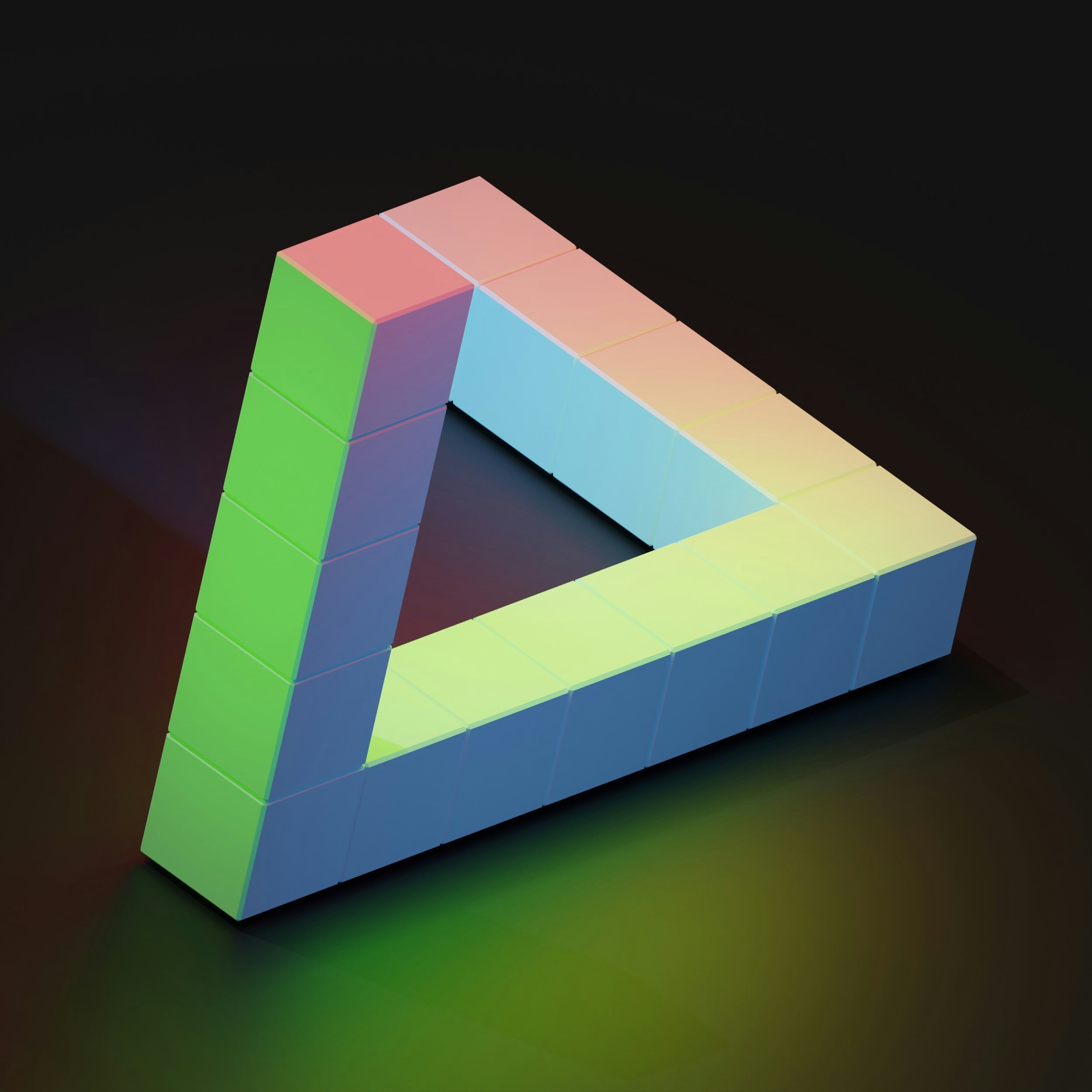
Reality Is Not What It Seems: A Scientific and Chassidic Exploration Post
Reality Is Not What It Seems: A Scientific and Chassidic Exploration
by Rabbi Shlomo Ezagui
At first glance, certain Chassidic stories can seem puzzling, even unsettling. They appear to defy the orderly structure of Halachah, time, and physical reality we are accustomed to. Yet when examined more deeply—especially in light of Chassidic teachings and even modern scientific perspectives—they reveal not chaos but a deeper, more unified order. These stories are not exceptions to reality; they are windows into a more essential layer of it. They remind us that what appears fixed and limited on the surface is rooted in a reality that is fluid, unified, and infinitely open.
Consider the story of the Tzemach Tzedek (Rabbi Menachem Mendel Schneerson 1789-1866). On the night of “Nittel”, when there is a widespread custom among many not to study Torah, the rabbi of Lubavitch entered and found the Tzemach Tzedek immersed in learning. Shocked, he exclaimed, “Rebbe, tonight is Nittel!” The Tzemach Tzedek responded sharply, “Who asked you to inform me?” Yet immediately afterward, he closed his Book.
On a simple level, the exchange is difficult to understand. If the custom is binding, why was he learning? And if it is not binding, why did he stop?
A second story deepens the question. After a long farbrengen, the chassidim of the Mittler Rebbe (Rabbi Dovber Shneuri, 1773–1827) were making their way home in the dark and rain after an inspiring and elevated Chassidic gathering. Seeking shelter, they unknowingly stood under the roof of a church. When they later realized where they had been, they were deeply disturbed and came to the Mittler Rebbe seeking a tikkun to cleanse themselves of the negative spiritual exposure. The Mittler Rebbe, however, smiled and dismissed their concern entirely.
Here, too, the surface contradiction is striking. One would expect a strong reaction to exposure to a place associated with impurity. Yet the Rebbe seemed to see no issue.
To approach these stories, we must shift how we understand reality itself.
Modern physics—particularly through thinkers such as David Bohm (1917–1992), one of the most brilliant, unconventional, and visionary theoretical physicists of the 20th century—has challenged the classical notion that the world is made up of separate, independent parts. Bohm proposed that at the deepest level, reality is an undivided whole, which he called an “implicate order,” from which all apparent separations emerge. Quantum field theory similarly describes a universe in which all particles are expressions of underlying, unified, and continuous fields. What appears to us as distinct objects are, in essence, localized expressions of a deeper, seamless reality.
Bohm offers the analogy of a flowing body of water. On the surface, one sees separate waves or vortices. Each appears to have its own identity, boundaries, and behavior. Yet beneath the surface, they are all part of and expressions of the same water, inseparable and continuously merging. The separateness is real at one level, but not at the level of essence.
This scientific model parallels a fundamental teaching in Chassidut: all existence is an expression of a single Divine reality. The multiplicity we experience—time, space, identity, and distinction—is a necessary contraction that enables finite beings to perceive and function. Yet beneath these distinctions lies an absolute unity.
An analogy can be drawn from human consciousness. Before a thought is expressed in words, it exists in a more abstract, undifferentiated form in the mind. When we speak, we must break that thought into letters, words, and sentences. These elements are discrete and structured, but they are only fragments of the original, unified idea. If we were able to see beyond the letters and words themselves, the true thought is far richer than its expression.
Similarly, the reality we experience is like the “letters” of a much deeper “thought.” The divisions of time, the constraints of nature, and the boundaries between objects are real within our framework—but they do not define the essence of existence.
This perspective enables us to revisit the Chassidic stories with greater clarity.
The observance of Nittel, like all customs, operates within the structured framework of halachic time. It reflects sensitivity to spiritual conditions as they manifest within the ordered system of the world. However, a Tzaddik (Godly Holy person) of the stature of the Tzemach Tzedek lives simultaneously in two planes: the revealed order and the underlying unity. From the perspective of essence, the distinctions that define specific times—such as Nittel—do not impose the same limitations.
Thus, when he was learning and concentrating deeply on the holy words of the Torah, he was operating on a deeper plane where such distinctions are not absolute. Yet when reminded and brought back to the normative reality, he chose to align with the normative framework, demonstrating that even one who transcends the system still respects and operates within it when appropriate.
The story is not about contradiction, but about two simultaneous truths: the validity of structure and the reality of transcendence.
The same applies to the episode involving the Mittler Rebbe. The chassidim recognized the church as a place of negative spiritual energy, a category defined within the structured world of distinctions between holiness and impurity. Their reaction afterward was sincere and appropriate within that framework.
However, the Mittler Rebbe perceived reality at its root, where no place is inherently separate from the Divine unity. From that vantage point, given the spiritually elevated status of chassidim at that time, the notion that one could become spiritually contaminated merely by standing under a structure loses its force. The “impurity” exists within the system of distinctions, but not at the level of essence.
Therefore, he dismissed their concern—not because their feelings were invalid, but because he was engaging with them at a deeper level of truth.
This duality is also reflected in a classic Talmudic discussion. The Babylonian Talmud teaches that after forty days from conception, the gender of a fetus is determined, and praying for a change beyond that point is considered “a prayer in vain” because it requests a miracle. Since the world generally operates within natural law, one should not rely on miracles.
In contrast, the Jerusalem Talmud holds that one may pray for a specific outcome even up to the moment of birth, when the gender has not yet been observed or known. This reflects a perspective more attuned to the underlying Divine reality, in which all possibilities remain open because the source itself is not bound by the structures it generates.
These are not contradictory positions but complementary ones. The Babylonian Talmud speaks from within the ordered system of nature, while the Jerusalem Talmud, from its elevated and more spiritual place in Israel, speaks from the perspective of the source that transcends it.
This framework also sheds light on seemingly extraordinary behaviors among great tzaddikim. There are accounts of the Lubavitcher Rebbe praying Mincha (the afternoon service) well after its halachic time had passed, after returning late from visiting his father-in-law’s resting place. On the surface, this appears problematic. Yet if one understands that such a Tzaddik is deeply connected to a dimension of reality in which time itself is not absolute, the act takes on a different meaning.
A similar idea emerges from a famous remark attributed to Ariel Sharon after a private audience with the Lubavitcher Rebbe. He reportedly observed that the Rebbe, seated in Brooklyn, seemed to have a clearer understanding of Israel’s geography and situation than military officials on the ground. From a purely physical perspective, this is difficult to explain. But if reality is fundamentally unified, access to deeper levels of awareness is not limited by physical distance as we normally assume.
In a world understood as fragmented, knowledge is constrained by location and information flow. In a world understood as unified at its core, those constraints are not absolute.
All of this leads to a powerful and practical conclusion. The structures of the world—time, space, causality, and limitation—are real and must be respected. They form the framework within which human life unfolds. However, they are not the ultimate reality.
Beneath them lies a deeper truth: that existence is rooted in an infinite, unified source where all possibilities are present. The limitations we encounter are, in a sense, surface-level expressions—necessary for our experience, yet not definitive of what is ultimately possible.
This awareness carries profound implications for how a person lives. It means that one should never be entirely confined by what appears fixed or inevitable. While one must act responsibly within the natural order, one must also recognize that the deeper reality is not bound by it.
Faith, trust, and prayer are not merely emotional supports; they are ways of connecting with that deeper dimension. They are acknowledgments that the surface does not exhaust the truth.
The Chassidic stories that initially seem “wild” are, in fact, deeply aligned with this perspective. They are not suspensions of reality but revelations of its depth. They remind us that what we see is only a layer—and that beyond it lies a unity in which the boundaries we take for granted begin to dissolve.
To live with this awareness is not to deny the world but to engage with it more fully. It is to navigate the structured surface while staying connected to the infinite depth beneath. In that space, what once seemed impossible quietly begins to open.
Hear from others who have been transformed by Rabbi Shlomo Ezagui's teaching
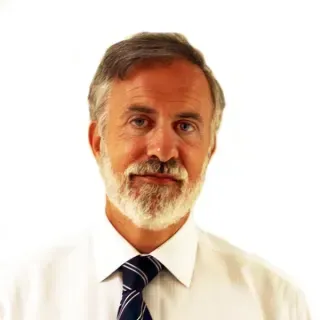
Richard Kradin, M.D
Harvard Medical School Massachusetts General Hospital
Director of Pulmonary Immunology and Molecular Biology
MGH Center for Psychoanalysis
Professor Harvard Medical School

I have known Rabbi Ezagui for several years. He is endowed with a keen intellect, psychological acuity, and broad knowledge of many topics that extend beyond the confines of religion. With a specific focus in the areas of nexus between modern physics and Kabbalah, his life's work has been devoted to sharing these ideas with others with genuine concern and compassion. I can recommend Rabbi Ezagui, with no compunctions, for virtually any enterprise to which he chooses to devote himself
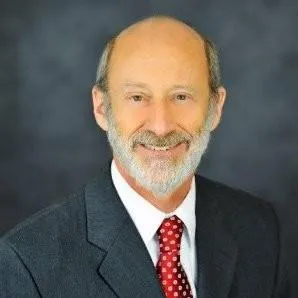
Gary Walk, Esq
Graduated from Yale University, B.A., summa cum laude, 1974 Harvard University, J.D., 1977,
I have known Rabbi Ezagui for many years, and have been a student in his diverse and lively Talmud class for several years. To Reform students who want a deeper understanding of Judaism, he offers answers to basic questions without condescension, and to Orthodox students, he provides affirmation and adds to their knowledge. He combines his extensive knowledge of Jewish law, history and spirituality with a rare ability to encounter every student in a way that is personal to him
© 2026 Rabbi Shlomo Ezagui - All Rights Reserved