
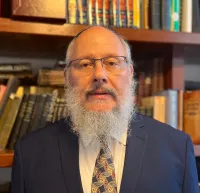
Contact Rabbi Shlomo Ezagui
Reach Out for Guidance, Wisdom, and Spiritual Growth
Whether you have questions about your spiritual journey, need guidance on life's challenges, or simply wish to connect with Rabbi Shlomo Ezagui, we are here to listen and assist.
Hear from others who have been transformed by Rabbi Shlomo Ezagui's teaching
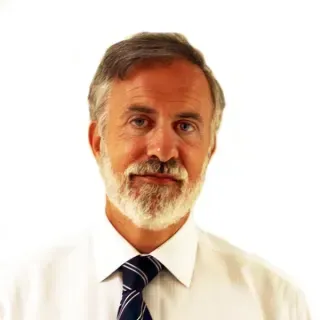
Richard Kradin, M.D
Harvard Medical School Massachusetts General Hospital
Director of Pulmonary Immunology and Molecular Biology
MGH Center for Psychoanalysis
Professor Harvard Medical School

I have known Rabbi Ezagui for several years. He is endowed with a keen intellect, psychological acuity, and broad knowledge of many topics that extend beyond the confines of religion. With a specific focus in the areas of nexus between modern physics and Kabbalah, his life's work has been devoted to sharing these ideas with others with genuine concern and compassion. I can recommend Rabbi Ezagui, with no compunctions, for virtually any enterprise to which he chooses to devote himself

Gary Walk, Esq
Graduated from Yale University, B.A., summa cum laude, 1974 Harvard University, J.D., 1977,
I have known Rabbi Ezagui for many years, and have been a student in his diverse and lively Talmud class for several years. To Reform students who want a deeper understanding of Judaism, he offers answers to basic questions without condescension, and to Orthodox students, he provides affirmation and adds to their knowledge. He combines his extensive knowledge of Jewish law, history and spirituality with a rare ability to encounter every student in a way that is personal to him
Read Our Latest Blogs

The Triumphant Joy After Failing
Once, a Chassidic student went to His Rebbe and asked, “What is the point of asking God for forgiveness when we know, and certainly God knows, we will fail again?”
The Rebbe asked the student to look out the window and tell him what he saw.
“I see a child falling and getting up again, falling and getting up again.”
The Rebbe told his Chassid, “The point is not so much that the child falls because that is natural. The lesson is to see the child stand up once more each time he falls.”
“On Yom Kippur — and for that matter every day, which is a miniature day of judgment — our hope and prayer are that God grant us the ability to stand up one more time. Every time we do so, we take another step and strengthen our muscles so that we fall less often and stay standing longer.”
The Book of Nechemia tells us the entire congregation who returned to Israel after the destruction of the first Temple in 587 BCE made Sukkot (huts), together with Ezra the scribe in 458 BCE. They sat in them, and the joy was abundant not seen since Joshua… 1500 BCE!
So, for over one thousand years that Sukkot was being celebrated, as the prophet attests, this intensity of festivity and joy was never celebrated before? How is that possible?
While serving God, some (very few indeed) never break the law (almost never), and some are learning from their mistakes and constantly re-evaluating and improving their thoughts, speech, and actions. Which of the two has greater value in the eyes of God?
The one who traversed the path of the righteous, never veering far from the road, and who has constantly progressed? Or, the one who has stumbled and failed along the way, has detoured, been delayed, bruised, and bumped?
Our sages tell us, “In the place of a returnee (repentant), even a great righteous man cannot stand.”
The person who gave in to his temptations has tasted the superficiality of a selfish, hedonistic lifestyle. This fellow tasted failure and experienced the epiphany of knowing the difference between living a worthwhile life and just living to push time along. This realization and the strength to overcome old habits make this person far more understanding and far stronger and endows him with a far greater depth and breadth of knowledge and an appreciation for real life than the person who never failed.
The generation of Joshua was that of the righteous. They entered into the covenant with God on the plains of Moav, and they were motivated by the experience of their own eyes, which saw Godliness, to observe all that was written in the Torah. When they entered the land of Israel, they were on a very high spiritual level.
The returnees to Jerusalem were after the destruction of the Temple and the harsh exile of Babylon, which was brought upon them, as the prophet Jeremiah had warned so many times, because of their rebellion against God.
When they finally repented, realizing the folly of their ways, and returned to Jerusalem to rebuild the second Temple, their joy was far richer and more profound than the generation of Joshua could have ever realized or appreciated. This was because of the hardships they endured.
They saw the bad and were now using all of it as a springboard to begin anew. They experienced deep darkness and appreciated the value of light like never before.
That is why they celebrated the holiday of Sukkot with “tremendous great happiness and joy,” most powerfully and passionately ever.
The holiday of Sukkot comes after the repentance and introspection of Rosh Hashanah and Yom Kippur. That is why the Torah tells us THREE times to be happy on this holiday. The happiness available, after one has failed and rehabilitated themselves, is the greatest, more significant on Sukkot than any other holiday.
Rabbi Sar Shalom of Belz once said, “I cannot fully explain the deep understanding of the dancing on Simchat Torah. But one thing one must know: any prayers that are not able to ascend (to God) throughout the year will go up on this day through dancing (and joy of this holiday).”
Chapter 245 www.aspiritualsoulbook.
Originally Published: https://blogs.timesofisrael.com/the-triumphant-joy-after-failing-2/
© 2026 Rabbi Shlomo Ezagui - All Rights Reserved